Pokémon FireRed & LeafGreen Nintendo Switch Review (2026)
Pokémon FireRed and LeafGreen are now on Nintendo Switch for $19.99 each. Read our full review covering gameplay, version exclusives, local trading, and more.
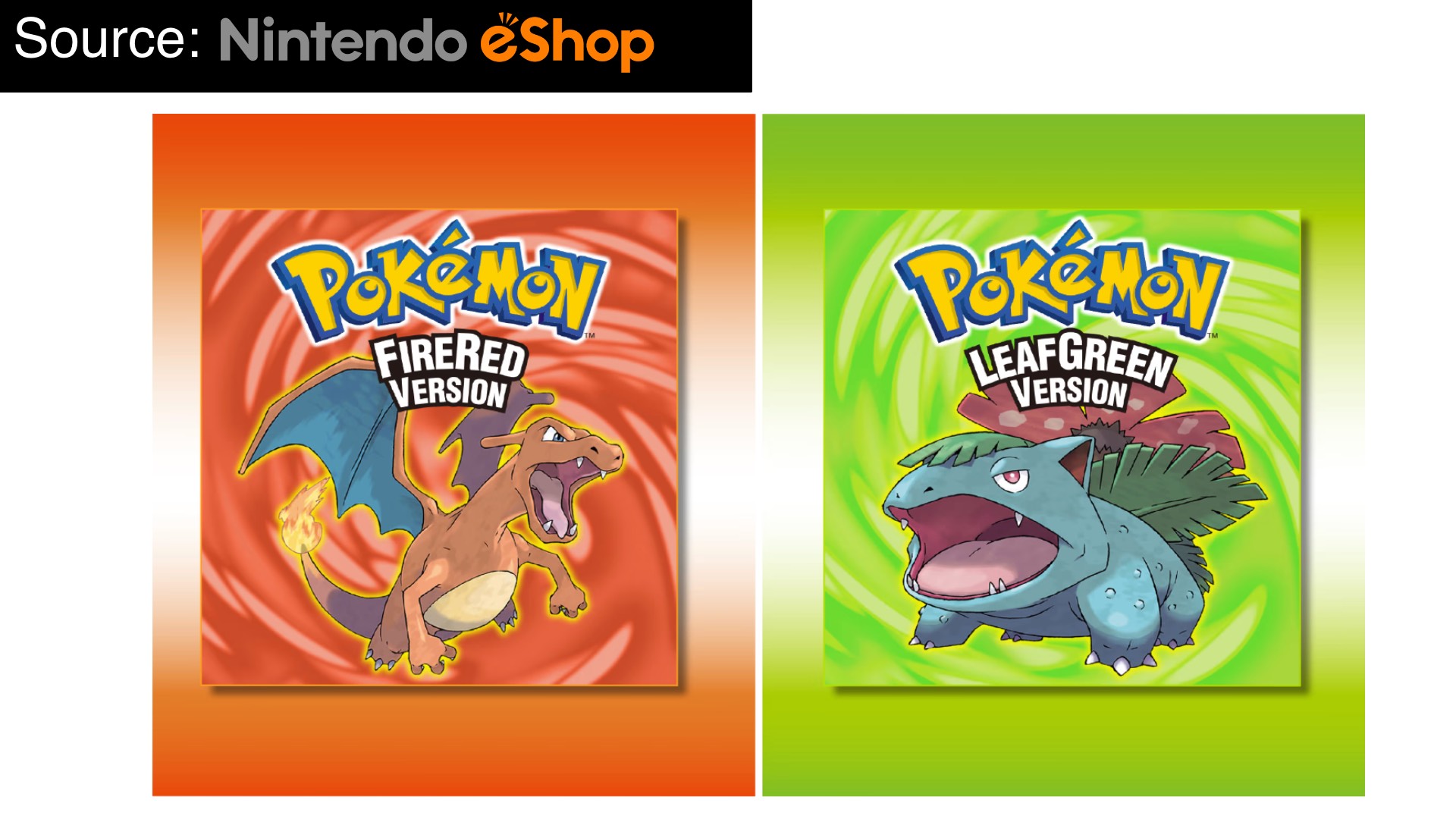
Rating: 8.5 / 10 Platform: Nintendo Switch (Digital Download) Genre: RPG Developer: Game Freak / ILCA Publisher: Nintendo / The Pokémon Company Price: $19.99 per title
Introduction
There is something quietly miraculous about returning to Pallet Town in 2026. The same wooden sign. The same overgrown grass your mother warns you not to walk through. The same Professor Oak, forever startled to find you near a wild Pokémon without so much as a Poké Ball to your name. When Nintendo announced that Pokémon FireRed and Leaf Green the beloved 2004 Game Boy Advance remakes of the original Kanto adventures would arrive on the Nintendo Switch eShop as digital downloads, the internet did what the internet always does: it lost its collective mind, half in celebration, half in skepticism.
Now that the games are here, the question worth asking is not simply "are they good?" we already knew they were good two decades ago. The real question is: do they hold up, and does this release treat them with the respect they deserve?
The short answer is mostly yes, with a few frustrating asterisks.
What's New (And What Isn't)
Let's get this out of the way early: FireRed and LeafGreen on Switch are not remakes of remakes. They are faithful ports of the original GBA titles, now running at native 1080p in docked mode and 720p in handheld. The pixel art already charming in its original form scales up gracefully, and Game Freak has made tasteful use of widescreen real estate by extending the environmental borders and adding subtle ambient animations to towns and routes that were previously static. Pallet Town at sunrise genuinely looks beautiful on a modern television.
What you are not getting is a wholesale overhaul. The core gameplay loop catching, training, and battling Pokémon across the Kanto region remains unchanged. The battle system still uses Generation III mechanics, which means no Fairy type, no Mega Evolutions, no held item auto-sorting. Veterans will feel right at home. Those coming in fresh from Pokémon Scarlet and Violet or even Sword and Shield may occasionally bump into the edges of an older design philosophy.
The Sevii Islands post-game content is intact, which is a genuine relief. These optional island chains gave the original GBA games a surprising amount of extra content and lore, and their inclusion here suggests Nintendo understands that completionists remember everything.
Presentation: Pixel Art That Earns Its Upgrade
The visual presentation deserves its own conversation. Rather than opting for a fully 3D art direction (as was done with Omega Ruby and Alpha Sapphire or Brilliant Diamond and Shining Pearl), Nintendo has chosen to preserve and enhance the 2D sprite work. This is, frankly, the right call. The pixel art of the GBA era has an earnestness and clarity that translates exceptionally well to large screens there is no uncanny valley, no awkward polygon seams, no character models that look slightly off in cutscenes.
The soundtrack has received a lush orchestral arrangement that can be toggled between the original MIDI compositions and the new score at any point in the settings menu. This dual-audio approach is an elegant solution. The original MIDI hits different when you're grinding on Route 1 at midnight for reasons that are entirely emotional and only slightly rational. The orchestral version, meanwhile, shines in gym battles and the Elite Four, where the added instrumentation gives proceedings a genuine sense of drama and stakes.
Gameplay: Timeless, With Honest Rough Edges
FireRed and LeafGreen were designed to introduce a new generation of players to Kanto while giving veterans reasons to return. In 2026, that mission statement holds with surprising endurance. The pacing of the early game collecting your starter, defeating Brock, navigating Mt. Moon remains one of the cleanest onboarding experiences in the franchise's history. The gym progression is logical, the rival is legitimately threatening, and the story, while paper-thin by modern narrative standards, has a directness that modern entries sometimes sacrifice for the sake of spectacle.
The updated control scheme maps naturally to Joy-Con and Pro Controller inputs, and touch-screen support in handheld mode allows for bag and menu navigation that feels genuinely intuitive. Running Shoes, famously tied to the B button in the GBA original, are now simply always active a small quality-of-life change that saves an enormous amount of thumb real estate over the course of a full playthrough.
That said, some design decisions have not aged well and have not been updated here. Random encounter rates on certain routes remain punishing by contemporary standards. The absence of a reliable in-game clock-based event system (a feature Gold and Silver introduced back in 2000) feels like an oversight rather than a stylistic choice. And multiplayer comes with a significant asterisk: trading and battling between players is supported exclusively via local wireless communication between two Nintendo Switch consoles in close proximity. Internet-based trading and online battles are not supported at all. This is a meaningful limitation in 2026, when the player base is scattered across cities and countries rather than clustered in the same room. Trading and battling with a friend still requires both of you to be physically present a charming throwback in theory, but a genuine logistical hurdle in practice. Version exclusives like Pinsir (FireRed) and Scyther (LeafGreen), and evolution-dependent trades like Haunter into Gengar, are only accessible if you can find someone locally to trade with. For many players, that simply won't be possible.
Version Exclusives: Choose Carefully
Because online trading is not supported and local wireless trading requires a second Switch owner nearby, which version you buy matters more than usual. Each game locks certain Pokémon behind its own digital download, and without a trade partner you may simply never obtain them. Here is the full breakdown of every version-exclusive Pokémon, sourced from Kotaku's pre-launch guide:
| # | 🔴 FireRed Exclusives | 🟢 LeafGreen Exclusives |
|---|---|---|
| 1 | Ekans | Sandshrew |
| 2 | Arbok | Sandslash |
| 3 | Oddish | Vulpix |
| 4 | Gloom | Ninetales |
| 5 | Vileplume | Bellsprout |
| 6 | Psyduck | Weepinbell |
| 7 | Golduck | Victreebel |
| 8 | Growlithe | Slowpoke |
| 9 | Arcanine | Slowbro |
| 10 | Shellder | Staryu |
| 11 | Cloyster | Starmie |
| 12 | Scyther | Magmar |
| 13 | Electabuzz | Pinsir |
| 14 | Bellossom | Marill |
| 15 | Wooper | Azumarill |
| 16 | Quagsire | Slowking |
| 17 | Murkrow | Misdreavus |
| 18 | Qwilfish | Sneasel |
| 19 | Scizor | Remoraid |
| 20 | Delibird | Octillery |
| 21 | Skarmory | Mantine |
| 22 | Elekid | Magby |
| 23 | Deoxys (Attack Forme) | Azurill |
| 24 | Deoxys (Defense Forme) |
A few things worth flagging: Scizor and Starmie are both trade evolutions (Scyther and Staryu respectively need to be traded to evolve), which makes their version exclusivity doubly painful under the local-only multiplayer restriction. Deoxys' forme difference is also notable for competitive players Attack Forme lands in FireRed while Defense Forme is LeafGreen-only, so dedicated battlers may find reason to pick up both versions regardless.
The Price Argument
At $19.99 per title, Nintendo has landed on a price point that feels genuinely fair. These are games that originally retailed for $34.99 in 2004, and $19.99 acknowledges both their age and their enduring value without asking players to pay a premium they haven't earned. It is one of the smarter pricing decisions the eShop has seen in some time.
The purchasing structure does require some careful attention, however. Each game version is sold as a separate digital download, and this extends across language editions as well. The eShop currently offers FireRed and LeafGreen in three languages English, French, and Spanish with each language version listed as its own distinct purchase at $19.99. That means an English copy of FireRed and a French copy of FireRed are separate SKUs; there is no universal multilingual edition. Players should make sure they are selecting the correct language version at checkout, as there is no in-game language switching between editions.
Those who purchase both the FireRed and LeafGreen versions of the same language will spend $39.98 comfortably below full retail price for a pair of games that, combined, offer roughly 60 to 80 hours of content depending on completionist ambition. That is strong value by any honest accounting. The inability to share, resell, or gift a digital purchase remains the persistent ghost haunting Nintendo's eShop ecosystem, and it looms here as it does everywhere else on the platform, but the $19.99 ask softens that frustration considerably.
Who Is This For?
Pokémon FireRed and LeafGreen on Nintendo Switch are, ultimately, for three kinds of people: those who grew up with the originals and want to relive them on a modern screen with modern conveniences; those who missed the GBA era entirely and want to experience Kanto in its most accessible historical form; and serious franchise fans who want the most complete version of the Kanto story before Scarlet and Violet's rumored Kanto DLC arrives later this year.
What it is not for is anyone hoping for a ground-up reimagining of Kanto. That game if it ever comes remains a dream. What we have instead is a lovingly preserved, thoughtfully upscaled version of a great Pokémon adventure, offered with enough modern polish to justify returning and enough retained roughness to remind you exactly what era it came from.
Verdict
Pokémon FireRed and LeafGreen on Nintendo Switch remind you why these games mattered in the first place. The Kanto region, even stripped of modern conveniences and running on twenty-year-old design logic, is a masterclass in focused RPG world-building. The visual and audio upgrades are handled with genuine care, the quality-of-life improvements are meaningful, and the experience of playing these games on a big screen in 2026 carries an emotional weight that no review score can fully quantify.
The local-only multiplayer is a real and frustrating limitation the absence of internet trading and online battles will shut many players out of core features entirely. The fragmented per-language, per-version purchasing structure adds unnecessary complexity at checkout. The lack of a physical release is a philosophical disappointment for collectors. These are legitimate criticisms, not nitpicks.
But when Lavender Town's music starts playing, or when your Charizard disobeys you for the third time in a row because your badges haven't kept pace with your ambition, or when the S.S. Anne slowly disappears from Vermilion Harbor you will remember why you fell in love with this franchise in the first place.
And that is worth quite a lot.
Pros:
- Gorgeous upscaled pixel art that respects the source material
- Dual-audio option (original MIDI + orchestral) is elegantly implemented
- Full Sevii Islands post-game content included
- Smooth, intuitive control remapping
- Touch-screen handheld support
Cons:
- Trading and battles are local wireless only no internet play or online trading
- Each language version (English, French, Spanish) is a separate purchase
- Sold as two separate titles with no bundle pricing
- Digital-only release disappoints collectors
- Some GBA-era design roughness left unaddressed
Pokémon FireRed and Pokémon LeafGreen are available now on the Nintendo Switch eShop.
Pinak Saha is a games critic covering RPGs, JRPGs, and the Nintendo ecosystem. He has played every mainline Pokémon game since Red and Blue on the original Game Boy, and his starter tier list is both definitive and non-negotiable.